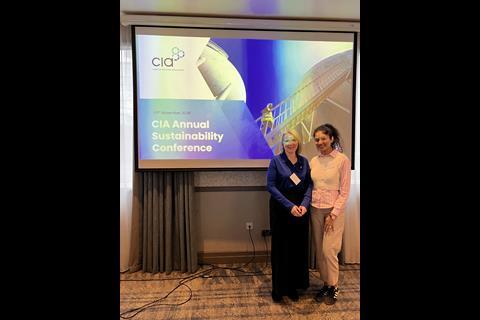
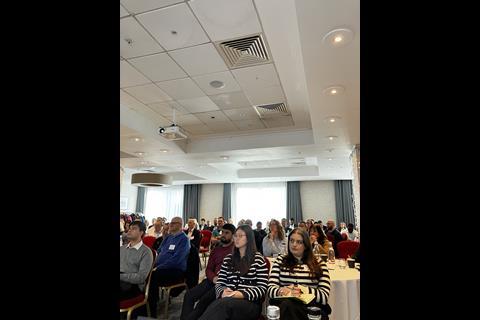
The sixth annual CIA Sustainability Conference brought together professionals from across the UK chemical industry in Leeds on 10 November to explore how the sector can become more sustainable, competitive and resilient.
Held at the Hilton Leeds City and chaired by Helen Coy, Global Senior Sustainability Manager at Innospec, the conference explored the role of decarbonisation, circularity and alternative feedstocks in driving industrial transformation. Discussions also covered the changing sustainability reporting landscape, energy management and emerging low-carbon technologies.
The morning sessions focused on the changing sustainability landscape and the practical steps businesses can take to improve energy performance and strengthen competitiveness.
Nicolas Heath, Partner at ERM, opened the programme with an overview of evolving sustainability reporting requirements. He also introduced a practical guide developed in collaboration with the CIA to help chemical businesses navigate these changes. The guide will be launched through CIA channels in due course.
John Barclay, Technical Director at SLR Consulting, followed with a look at energy management and decarbonisation across the chemical sector. His session considered how businesses can improve industrial performance while advancing circularity and more sustainable operations.
The focus then shifted to energy costs and security. David Kipling, CEO of On-Site Energy Ltd, discussed how behind-the-meter power purchase agreements (PPAs) can help chemical manufacturers access on-site energy solutions and support their decarbonisation plans.
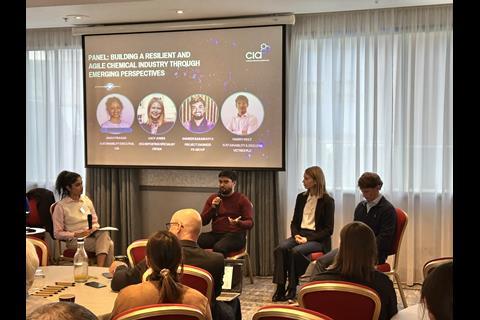
These themes continued in a panel discussion titled Building a resilient and agile chemical industry through emerging perspectives. Moderated by Anavi Prasad, Sustainability Executive at the CIA, the discussion brought together Lucy Jones, ESG Reporting Specialist at Croda; Sameen Barabhuiya, Project Engineer at px Group; and Harry Holt, Sustainability & ESG Lead at Victrex. The conversation considered the challenges facing the industry and the importance of collaboration and adaptability in building long-term resilience.
The afternoon turned to the role of emerging technologies and alternative feedstocks in reducing the chemical industry’s reliance on fossil resources.
Stephen Livermore, Technical Manager at Green Cat Hydrogen, examined the potential of green hydrogen pathways such as green ammonia and e-methanol. He also discussed how government support through the Hydrogen Allocation Round (HAR) could help develop commercially viable UK production while addressing the challenges of energy costs and pricing.
Building on the theme of alternative feedstocks, Nick Smith, Commercial Director at Viridi, demonstrated how captured CO₂ can be used as a resource in chemical manufacturing. His session showcased catalytic technology that converts CO₂ into polymer materials with potential applications in surfactants, coatings, adhesives and polyols.
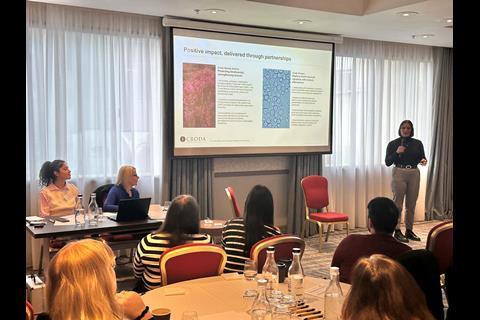
The programme then turned to bio-based alternatives. Sarah Davidson, Technology Development Lead at Croda, discussed opportunities to increase the use of bio-based ingredients in specialty chemicals and reduce dependence on fossil-derived raw materials. Tristan Davenne, Head of the Energy Research Unit at the Science and Technology Facilities Council, followed with an introduction to Project ASPIRE and its work on flexible green ammonia synthesis.
Taking a wider view of the industry’s transition, Professor Sir Richard Catlow FRS of University College London presented Great British Chemicals: A Collaborative Blueprint to Defossilise the UK Chemical Sector. He emphasised the need for a coordinated approach to accelerate the transformation of UK chemical manufacturing.
The programme concluded with Sandy Dhesi, Commercial Manager at Ecoveritas, examining Extended Producer Responsibility (EPR) and the importance of accurate data. Her session considered how better data management and collaboration across the value chain can help businesses manage compliance requirements and reduce costs.
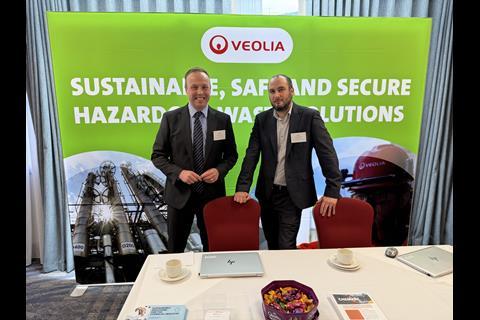
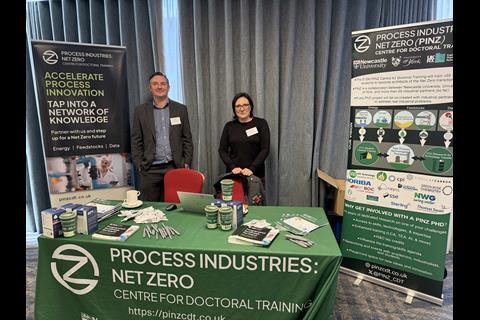
Alongside the conference sessions, exhibitors showcased technologies and solutions supporting the chemical industry’s sustainability and energy transition. EDF power solutions, National Energy System Operator (NESO), On-Site Energy, Veolia, SLR, PINZ CDT, Mypower, Geosyntec, Blue Capsule and Puragen gave delegates the opportunity to learn more about developments in low-carbon energy, on-site renewables, waste and resource recovery, environmental consultancy and industrial innovation.
A clear message emerged throughout the day. Building a sustainable and competitive UK chemical industry will require more than technological innovation. Collaboration across the value chain, investment and access to competitive energy will all be essential to turning ambition into practical action at industrial scale.
The CIA would like to thank all speakers, panellists, sponsors, exhibitors and delegates for contributing to the success of the conference. Special thanks go to our sponsors, SLR Consulting and On-Site Energy, for their support.
We look forward to continuing these conversations and supporting progress towards a more sustainable, resilient and competitive UK chemical industry.