
- Home
- About
Economic Reports
The CIA gathers industry insights through a quarterly business survey to advocate for our members’ interests with policy makers, regulators and other stakeholders.
Read more
- Our focus
CIA Sustainable Health Metrics Tool
Use our Sustainable Health metrics to drive continuous improvement and foster a sustainable, healthy workplace.
Read more
- The Chemical Industry
The Chemical Industry
The chemical and pharmaceutical industry is fundamental to modern society. With an immense variety of products, from vital medicines and foods, the construction of buildings, to transport and leisure, the industry truly does have an impact on virtually every aspect of our daily lives.
Read more
- Events
- News
- Become a member



Net Zero
Mapping the UK chemical industry’s journey to Net Zero
Showcasing the investments and innovations driving the nation’s low-carbon future.
Home > Our Focus > Net Zero > Mapping the UK chemical industry’s journey to net zero
At the Core of UK Manufacturing
The UK chemicals sector has rightly been recognised as “at the core of Advanced Manufacturing underpinning all domestic manufacturing.” As a vital foundation for every supply chain, the chemical industry touches almost every aspect of modern life from food and energy to transport, housing and healthcare.
Our position at the root of every supply chain, means decarbonising the chemical industry brings a ripple effect, reducing emissions across all sectors.
About the Investment Map
The CIA Investment Map is an interactive tool highlighting the scope and scale of net zero projects across Chemical Industries Association member companies.
From clean fuels to circular chemistry, these investments demonstrate how our members are building the technologies and infrastructure for a cleaner, more competitive future.
The map illustrates the breadth of opportunity within the UK chemical industry and the need to act now to fully seize it.

Our mission is to bring you many more projects on this map. We are advocating a smarter approach to net zero policy, one that reflects a realistic transition for UK industry. This means competitive energy prices and pragmatic carbon policies that deliver decarbonisation and circularity, rather than drive deindustrialisation.
The Investment Map showcases six key technologies the industry is advancing to reach net zero, alongside the projects and investments being rolled-out across CIA member companies.
Key technologies

AI
AI is helping chemical companies improve efficiency, strengthen reliability, and reduce waste by analysing operational data and supporting better decision‑making. It also assists teams in optimising processes and identifying opportunities to cut energy use and emissions.
As digital tools become more widely used across the sector, AI is expected to play a growing role in supporting productivity and sustainability.
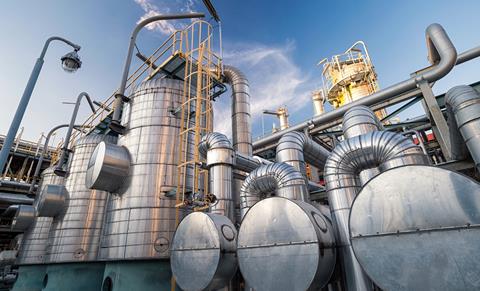
Renewable electricity
Carbon Capture, Use and Storage (CCUS) is a critical enabler for deep decarbonisation in the UK chemical sector, particularly where emissions arise not only from fuel use but also from core chemical processes.
Chemical production often generates “process emissions” from chemical reactions that cannot be eliminated through electrification alone. CCUS directly addresses this challenge by capturing CO₂ at source and either storing it safely in offshore geological formations or turning it into new chemical products. By integrating CCUS with hydrogen production and the production of hydrogen derivatives – including new low carbon fuels like sustainable aviation fuel (SAF) and methanol - the chemical sector can underpin clean growth whilst reducing emissions and remaining internationally competitive.
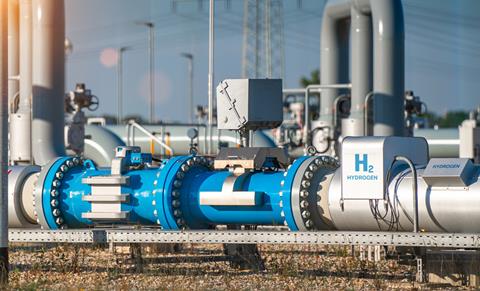
Low carbon hydrogen
Low‑carbon hydrogen offers a crucial pathway for the UK chemical sector to decarbonise both energy use and feedstock supply. Hydrogen is already fundamental to producing key chemicals such as ammonia and methanol, and shifting to low‑carbon forms - whether electrolytic (“green”) or CCS‑enabled (“blue”) - can significantly cut lifecycle emissions.
Hydrogen’s ability to decarbonise high‑temperature heat, replace fossil‑derived feedstocks, and integrate with CCUS clusters positions it as a cornerstone of industrial decarbonisation. As national policy support to scale hydrogen production makes clean molecules more widely available at a competitive price, new supply chains of hydrogen derivative chemicals can emerge to underpin new technologies and decarbonisation pathways.
For the UK chemical sector, expanding low‑carbon hydrogen supply will therefore be essential to cutting emissions, sustaining production, and ensuring long‑term net‑zero alignment.
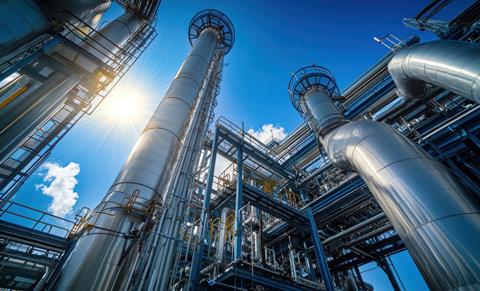
Carbon Capture Use and Storage (CCUS)
Carbon Capture, Use and Storage (CCUS) is a critical enabler for deep decarbonisation in the UK chemical sector, particularly where emissions arise not only from fuel use but also from core chemical processes.
Chemical production often generates “process emissions” from chemical reactions that cannot be eliminated through electrification alone. CCUS directly addresses this challenge by capturing CO₂ at source and either storing it safely in offshore geological formations or turning it into new chemical products. By integrating CCUS with hydrogen production and the production of hydrogen derivatives – including new low carbon fuels like sustainable aviation fuel (SAF) and methanol - the chemical sector can underpin clean growth whilst reducing emissions and remaining internationally competitive.
The chemical sector sees CCUS as a foundation of the UK’s clean‑energy economy and a driver of long‑term industrial circularity and resilience.

Biofuels and materials
Biomass offers a renewable, low‑carbon source of carbon for the UK chemical sector, helping to reduce dependence on fossil carbon feedstocks and supporting the transition to a circular and net zero economy.
Biomass is a versatile resource that can displace fossil‑derived materials in the manufacturing supply chain and even deliver negative emissions when paired with carbon capture use and storage (CCUS). Biomass can also play a role in providing renewable process heat to hard-to-electrify industries, either directly as biomass or when converted into biogas, providing a critical decarbonisation pathway for the chemical sector.
UK chemical producers see biomass as a sustainable alternative feedstock for producing chemicals, fuels, and materials, helping to lower lifecycle emissions across chemical value chains.

Chemical recycling
Chemical recycling offers a pathway for the UK chemical sector to accelerate progress toward a net zero and circular economy.
Unlike mechanical recycling, which struggles with mixed, contaminated, and multi‑layered plastics, chemical recycling can break down complex plastic waste into molecular feedstocks suitable for producing new, high‑quality chemicals and fuels. This reduces reliance on fossil‑based feedstocks and supports a circular economy by turning waste streams into valuable resources. Chemical recycling should be seen as complementary to mechanical recycling, stepping in to fill key gaps in our waste capacity and raw material supply chain.
The UK chemical sector views chemical recycling as having a material role in decarbonising chemical manufacturing, while enabling a more circular and resource‑efficient economy.
A key building block of the economy
Find out how the chemical industry fuels UK growth