



Case Study
Dow - Sustainability Academy with University of Cambridge
Investing in sustainability leaders of the future.
The CIA gathers industry insights through a quarterly business survey to advocate for our members’ interests with policy makers, regulators and other stakeholders.
Read more
Use our Sustainable Health metrics to drive continuous improvement and foster a sustainable, healthy workplace.
Read more
The chemical and pharmaceutical industry is fundamental to modern society. With an immense variety of products, from vital medicines and foods, the construction of buildings, to transport and leisure, the industry truly does have an impact on virtually every aspect of our daily lives.
Read more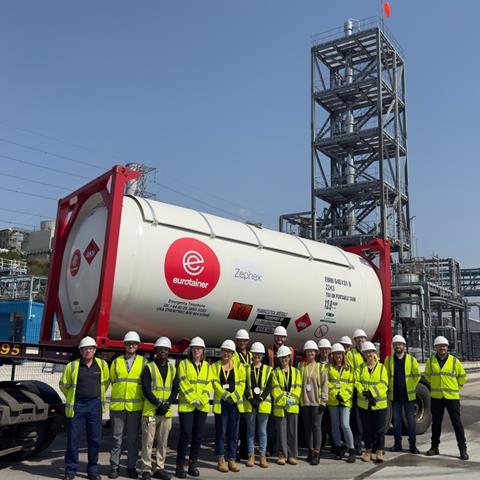
Orbia Fluor & Energy Materials is accelerating the transition to lower‑impact inhalers with Zephex® 152a, a next‑generation propellant that cuts global warming potential by around 90% while maintaining continuity of care. By pairing product innovation with targeted manufacturing improvements, the company is showing how essential medicines can decarbonise without disrupting patients or production.
As the chemical and pharmaceutical industries progress toward net zero, Orbia Fluor & Energy Materials is supporting this transition through its low global warming potential propellant, Zephex® 152a. The technology enables continued access to essential inhaled medicines while significantly reducing the environmental footprint of pressurised metered dose inhalers, which remain a cornerstone of respiratory care.
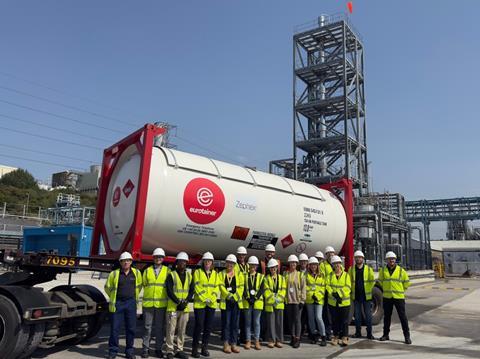
The image celebrates the first ISO tank of Zephex 152a leaving Orbia’s site in Runcorn in late 2025. Image supplied by Orbia Fluor & Energy Materials. Source: Orbia Fluor & Energy Materials.
Balancing climate ambition with patient need
Pressurised metered dose inhalers are widely used in the treatment of asthma and chronic obstructive pulmonary disease, particularly for patients unable to use dry powder inhalers. While clinically essential, conventional hydrofluorocarbon propellants carry a high environmental burden, placing the sector under increasing pressure to decarbonise.
Zephex® 152a delivers around a 90% reduction in global warming potential compared with legacy propellants. Crucially, this is achieved within existing device formats, preserving usability, clinical performance and patient familiarity, ensuring emissions reductions without compromising continuity of care.
Supporting system-wide transition
The benefits of Zephex® 152a extend across the healthcare ecosystem. It enables pharmaceutical manufacturers to decarbonise established inhaler portfolios without the need for device redesign or changes to treatment pathways, while ensuring patients continue to receive proven and effective therapies.
For healthcare systems, it provides a practical route to reducing emissions associated with respiratory care, supporting broader net zero objectives without compromising clinical outcomes.
Reducing emissions through manufacturing improvements
Alongside product innovation, Orbia Fluor & Energy Materials has implemented targeted improvements across its manufacturing processes, with a particular focus on reducing emissions associated with quality control sampling.
Historically, fugitive emissions from legacy Zephex® 134a processes were approximately 1,412.8 tonnes CO₂e per year. Through process redesign and the transition to Zephex® 152a, this has been reduced to 135.5 tonnes CO₂e, delivering a reduction of 1,277.3 tonnes CO₂e.
Further optimisation of sampling frequency has contributed an additional 33.8 tonnes CO₂e reduction, reinforcing continued progress in improving operational efficiency and emissions performance.
A step change in environmental performance
These improvements deliver a clear and measurable reduction in environmental impact, including:
Taken together, they demonstrate how targeted process optimisation, when combined with next-generation chemistry, can deliver meaningful and scalable environmental gains in industrial manufacturing.
Delivering at scale through collaboration and looking ahead
Scaling from pilot to full production required close coordination across engineering, operations, process safety, quality and manufacturing teams. This integrated approach ensured the facility was delivered safely, reliably and in line with regulatory expectations, while embedding sustainability into routine operations from the outset.
Zephex® 152a demonstrates how lower-impact propellant chemistry, combined with continuous manufacturing improvement, can deliver meaningful emissions reductions at scale while maintaining essential clinical outcomes.
To learn more, contact the Orbia Fluor & Energy Materials team via https://www.orbia-fem.com







Investing in sustainability leaders of the future.